
Finding Columbia Heights Residents
Columbia Heights has no single official roster of every resident. A good search starts with the record that matches the question. A Columbia Heights address works best in Anoka County parcel tools. A person connected to a public court case can be checked in the statewide court index. A past household may appear in a newspaper, a directory entry, or a historical map. Keep the record role clear: a parcel owner, a tax-mail recipient, a voter, a case party, and a directory entry are different things. A current owner record is not proof of current occupancy.
For a current Columbia Heights address, preserve the parcel identification number, or PIN, along with the street address and the date checked. For a name, note spelling variants and a date range before moving between sources. That small record of the search makes it easier to spot a same-name mismatch later. It also keeps the Columbia Heights residents directory useful for family history, estate work, reconnection, civic questions, and personal safety without overstating what any one record proves.
- Search the county GIS by a house number and street fragment, then write down the parcel address and PIN.
- Compare the property record’s owner and mailing fields with the record date instead of assuming either field identifies a resident.
- Use the recorder’s grantor and grantee index when a transfer history, deed, or legal description is needed.
- For a known individual and complete registration details, use Minnesota’s official registration lookup only within its legal limits.
- When the trail is historical, check library, historical-society, and Minnesota Historical Society collections before making a focused public-data request.
Columbia Heights Records Offices
Columbia Heights sits wholly in Anoka County, so records are divided among City Hall, county property offices, the district court, and statewide custodians. The City Clerk is the municipal doorway for council material, public notices, data practices, and city records. County Property Records and Taxation handles parcel and tax routing, while the Recorder and Registrar of Titles maintains the recorded land archive. The City Hall office is often the best first call for a city-held record; a deed or parcel chain belongs with the county.
Property Records and Taxation
2100 3rd Ave
Anoka, MN 55303
763-323-5400
Columbia Heights City Clerk
3989 Central Ave NE
Columbia Heights, MN 55421
763-706-3612
The City of Columbia Heights service directory provides the practical starting point for clerk, permit, code-enforcement, and public-records routing.
The city links its clerk and public-records paths from that official service hub, rather than maintaining a general resident list.
The City Clerk / Council Secretary page is a second useful route for agendas, packets, minutes, notices, elections, archives, and data-practices information.
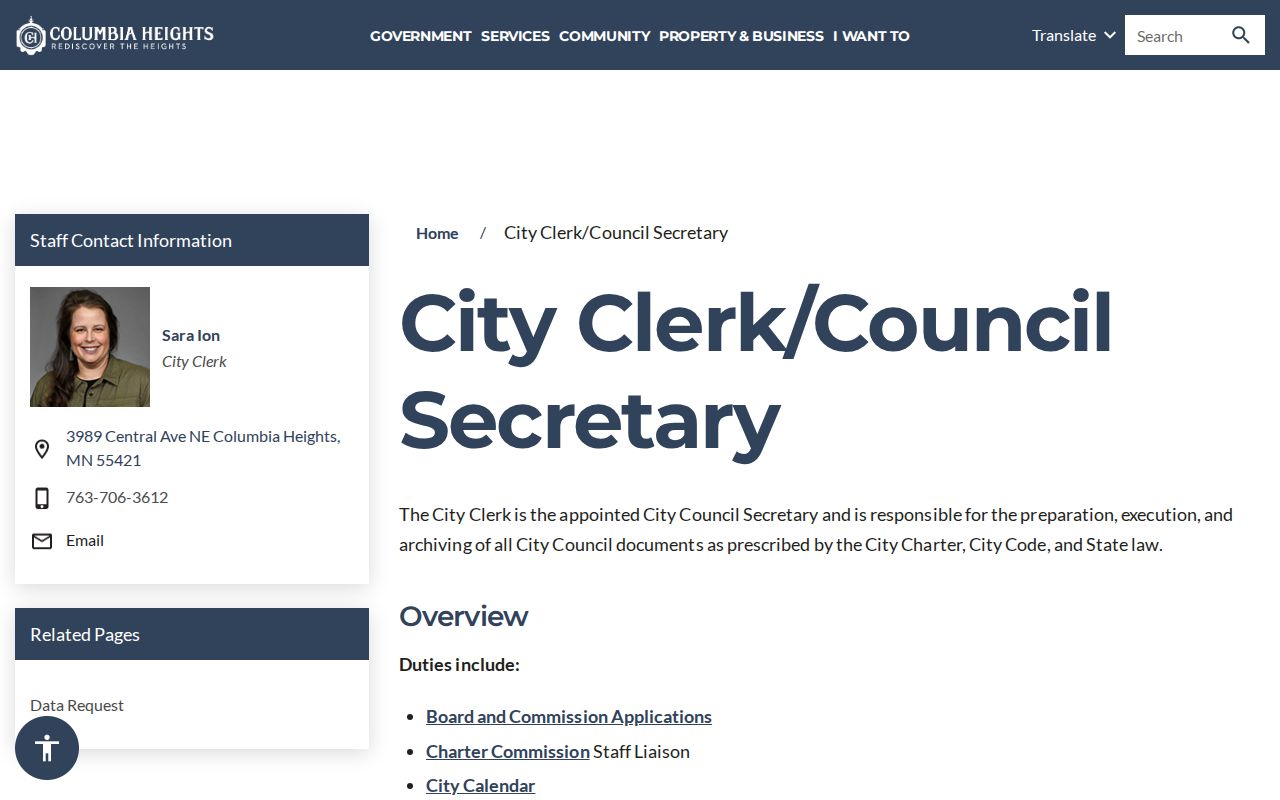
A focused request naming a meeting date, permit number, parcel, or record series is more workable than asking a city office to assemble a list of residents.
Columbia Heights Parcel Path
The Anoka County Property Search GIS is the main county tool for turning a Columbia Heights address into a stable parcel record. Its documented categories include Addresses, Parcel IDs, Plats, Half Sections, Schools, and Public Buildings. Enter a house number and street or a partial address, omitting the city and punctuation, then select the correct match. A PIN can be entered with or without dashes. The map also offers aerial imagery, plat layers, historical aerials, a Near Me radius tool, map exports, and a street-intersection format using two street names joined by an ampersand.
| GIS field or tool | How it works | Why retain it |
|---|---|---|
| Address | House number plus street, including partial street fragments | Finds the current parcel starting point |
| Parcel ID / PIN | Accepts dashed or undashed numbers | Bridges GIS, tax, and recorder research |
| Plat | Searches plat categories and map context | Connects lot and block language to a place |
| Historical aerials | Available alongside current map views | Helps date physical changes without identifying people |
A parcel is the mapped unit of land. Its situs address is the property location, while an owner mailing address is where tax mail is sent. A plat is a mapped subdivision description. Those fields can point in different directions, so the Columbia Heights residents directory treats them as separate facts.
- PIN
- The parcel identification number, a stable link between county land records.
- Index
- A searchable list of records, which may not include every underlying image.
- Criss-cross directory
- A reverse directory arranged by address rather than by a person’s name.
- Resident roll
- A source that records a person’s role, such as owner or voter, at a particular time.
The county’s Property Information page connects the property access site and the mapping application, an important fallback when one service is unavailable.
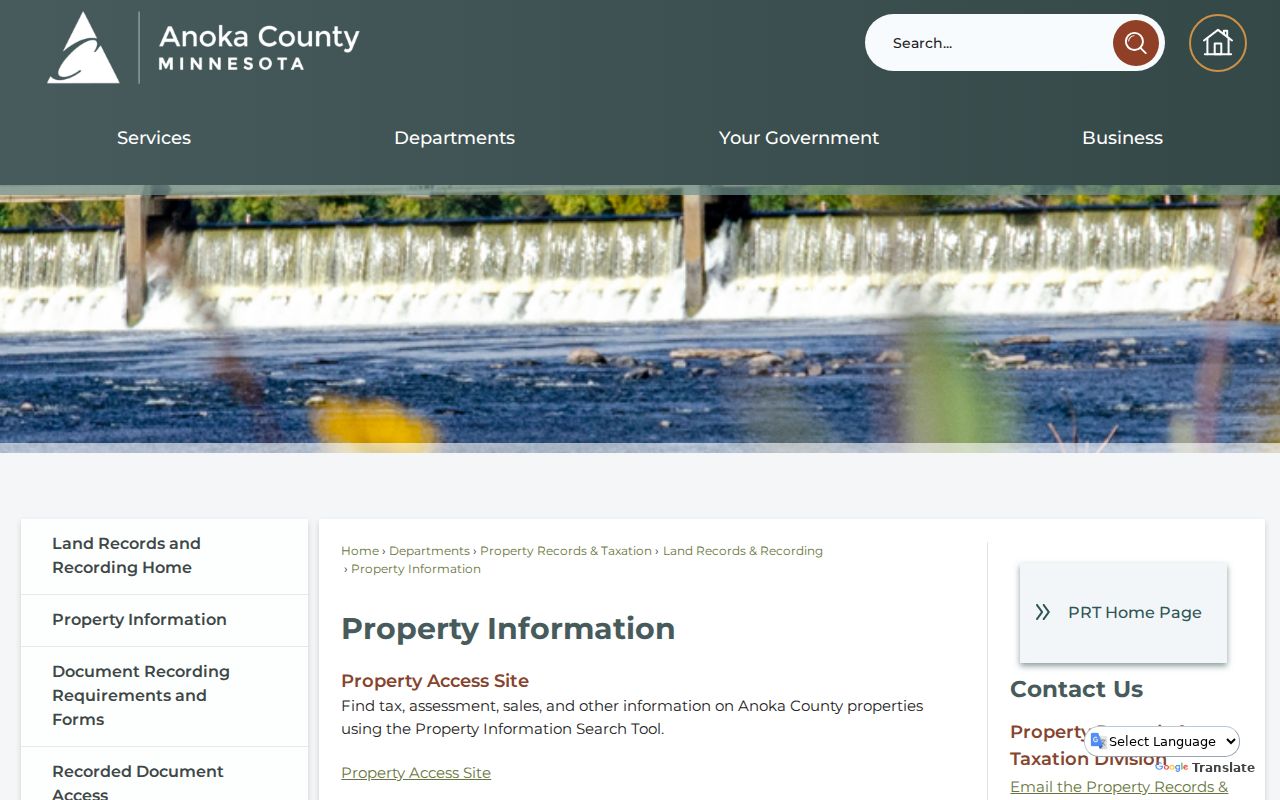
Once an address has a PIN and legal description, a fuller address-by-address trail belongs on the Columbia Heights street directory path.
Columbia Heights Deed Trails
The Recorder and Registrar of Titles keeps deeds, mortgages, satisfactions, and other recorded real-property instruments for Anoka County. Search the grantor side for a person transferring an interest and the grantee side for a person receiving one. Then compare the instrument number, recording date, document type, PIN, legal description, and image availability. Minnesota’s recorder index statute, Minn. Stat. §386.03, describes core reception-index fields such as grantor, grantee, land location, instrument number, and kind of instrument.
Access is not one free, complete online historical search. Anoka County describes a subscription service for continuing grantor and grantee research, a public research area with Room 119 terminals, and bulk optical images. The bulk images cost $0.15 each but do not contain the grantor and grantee index, so they are most efficient when the instrument number is already known. The official material did not identify an online year cutoff. For an older Columbia Heights address, contact the recorder or use the public room instead of assuming the subscription screen covers every era.
Property Alert is a free county service tied to a PIN that reports later document metadata and images to subscribers. It is useful for watching a future change, but it does not replace a complete title sequence.
Current Columbia Heights Directories
Current Columbia Heights directory-like sources list people only in defined roles. County parcel records may show an owner and a mailing recipient. The city staff directory lists city employees, not households. MCRO identifies parties in public court cases, subject to restrictions. Minnesota’s voter lookup verifies a registration when complete details are supplied. These sources should be compared, not blended into a claim of current residence. A source date and the listed role matter as much as the name.
| Columbia Heights source | Role shown | Custodian | Access route |
|---|---|---|---|
| Parcel and tax record | Owner, mailing address, parcel facts | Anoka County | GIS, property site, or county counter |
| Recorder index | Grantor and grantee in a land record | Recorder / Registrar | Subscription, Room 119, or ordered image |
| Voter registration lookup | Registration status for supplied identity details | Minnesota Secretary of State | Official individual lookup |
| City staff listing | Department, title, email, and phone | City of Columbia Heights | Official staff directory |
| Historic newspaper or directory entry | Past listing or public mention | Library or archive | Collection, microfilm, or research request |
Official records have a clear custodian, date, and known limits. Commercial people-finder products may combine fields from different times and roles, which makes them a poor substitute for checking the underlying public source. When two official records disagree, keep both dates and ask the appropriate custodian which field it maintains.
Columbia Heights Voter Verification
The Minnesota Voter Registration Lookup is designed to verify a person’s own registration, not to discover a citywide set of names. It asks for first and last name, full date of birth, and address information. The address route uses either ZIP or county together with city or township, house number, and street. A unit number is required when that option is selected. The system is updated nightly, although election offices may need up to 14 days to process a registration or change.
Public voter-list use is restricted by Minn. Stat. §201.091. Anoka County’s campaign-tools information describes precinct geography searchable by address, street, and house range, but the voter database is limited to elections, political activity, or specified law-enforcement purposes. A registration result does not establish ownership, a permanent address, or the identity of every person with the same name.
Note: A missing registration result can reflect formatting, a recent move, processing lag, or a protected address, so use the official support route rather than broadening the search.
Columbia Heights Court Leads
Minnesota Court Records Online, known as MCRO, provides a statewide case search that can be narrowed to Anoka County. It supports name, case number, citation number, and attorney searches, along with date of birth or filing-date fields, case category, status, and court location. Use a legal-name variant and a date range where possible. The name search permits a trailing wildcard after two characters, but that option cannot be combined with Sounds Like.
MCRO results are unofficial and not certified. The portal may show case information, a Register of Actions, and certain public documents, but it masks or excludes protected material. A Columbia Heights result is not proof of identity, current address, responsibility, or outcome. The Anoka County Courthouse has public terminals that can offer more complete electronic access when the web record is restricted; court staff can explain access and copy procedures but do not provide legal advice.
Columbia Heights Vital Paths
Birth, death, marriage, and divorce records do not sit in one Columbia Heights office. The Minnesota Department of Health Vital Records program has Minnesota births since 1900 and deaths since 1908. Any Minnesota county vital-records office may serve statewide requests, while MDH accepts mail or fax applications but does not offer a public counter. A public birth record can permit a noncertified copy, but certified and confidential records have eligibility, identification, and attestation rules. Noncertified death records are public, while certified death certificates still have requester rules.
A marriage certificate comes from the county that issued the license, and the Minnesota Official Marriage System indexes most state marriages. Anoka’s index coverage is listed as 1858 to current. A divorce decree belongs with the Anoka County District Court. For earlier research leads, MNHS People Records indexes births from 1900 to 1934 and deaths from 1904 to 2001, but an index entry is not automatically a certificate.
The MDH vital-records information page explains the statewide product and ordering routes.
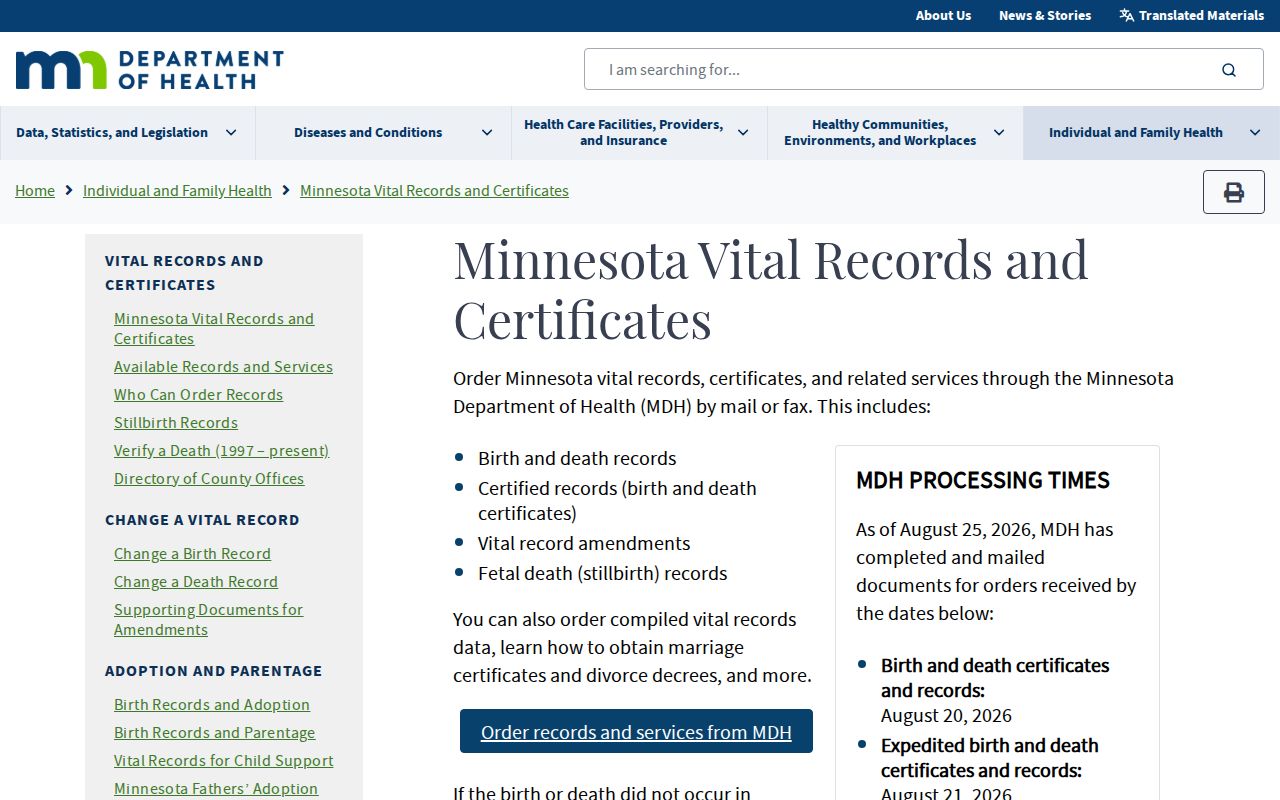
Use a historic vital index as a lead, then follow the eligibility rules for the record product that is actually needed.
Historical Columbia Heights Directories
Historic Columbia Heights research depends on several shelves, not a confirmed single online run of city directories. The Columbia Heights Public Library, an affiliated Anoka County Library at 3939 Central Ave N, can help with local reference and historical material. The Anoka County Historical Society holds newspapers, census records, photographs, maps, obituaries, microfilm, cemetery information, and vital-statistics indexes. Its map holdings include 1888, 1914, and 1932 plats, which can translate a lot or old locality into a modern address question.
Hennepin County Library’s digital Phone Books and City Directories collection is useful for nearby-city leads, especially Minneapolis, but its published scope does not establish a Columbia Heights-specific run. Treat a Minneapolis listing as an adjacent-city lead and verify the jurisdiction. For a detailed directory-entry method, the historical collections are developed further in the Columbia Heights city directory material.
Columbia Heights Newspaper Handoff
One local records story is especially useful when a surname search seems to stop. The Anoka County Historical Society identifies the Columbia Heights Pioneer from January through November 1939, followed about a month later by the Columbia Heights Record. A search that misses in one title may succeed when the publication title changes. That is a source-name issue, not evidence that the person vanished or moved.
The historical society’s research collections include selected Record issues, earlier Anoka-area newspapers, obituaries, maps, census resources, and local files. Record the publication title, issue date, page, and repository with any finding. That citation keeps a Columbia Heights residents directory lead traceable and lets a later researcher recheck the original context.
Anoka Documents by the Numbers
Anoka County’s 2024 Property Records and Taxation annual report recorded 44,329 documents: 34,376 Abstract and 9,953 Torrens. The count shows why the recorded-land system needs its own index and research-room access instead of being treated as a simple name list. Abstract and Torrens describe different land-registration systems, and a record’s status affects how a transfer is documented. The statistic is a 2024 baseline, not a current count or a claim that all documents are equally available online.
For a Columbia Heights parcel, use the legal description and document number to narrow the work before ordering copies. County fee schedules distinguish plain, attested, certified, plat, recording, and other services. Confirm the current schedule before an order because the researched schedule was effective July 1, 2025.
Columbia Heights Privacy Limits
The Minnesota Government Data Practices Act classifies government data as public or not public under a specific law. Public access never makes every field suitable for publication. Court systems mask protected information, vital records have eligibility rules, and voter data has use restrictions. A missing Columbia Heights address should not prompt a more aggressive search. It may reflect a format problem, a delayed update, a confidential record, or Minnesota’s address-confidentiality program.
Minnesota Safe at Home provides a substitute post-office-box address and mail forwarding for participants who fear for their safety. Do not try to correlate that designated address with parcel, voter, or court material. If a record is protected, contact the custodian about the classification rather than attempting to uncover the person’s location.
Columbia Heights resident records are for lawful personal research and civic transparency, never for stalking, harassment, intimidation, or harm.
Columbia Heights Records Requests
When a record is not online, send a precise request to the office that owns it. Under the Minnesota Government Data Practices Act, Minn. Stat. ch. 13, the public may inspect and copy public government data unless a law classifies it otherwise. The agency does not have to create a new report or answer a broad research question. Ask for existing public records and give a department, address or PIN, date range, record type, and preferred delivery method. Inspection is free; copy charges vary with the request.
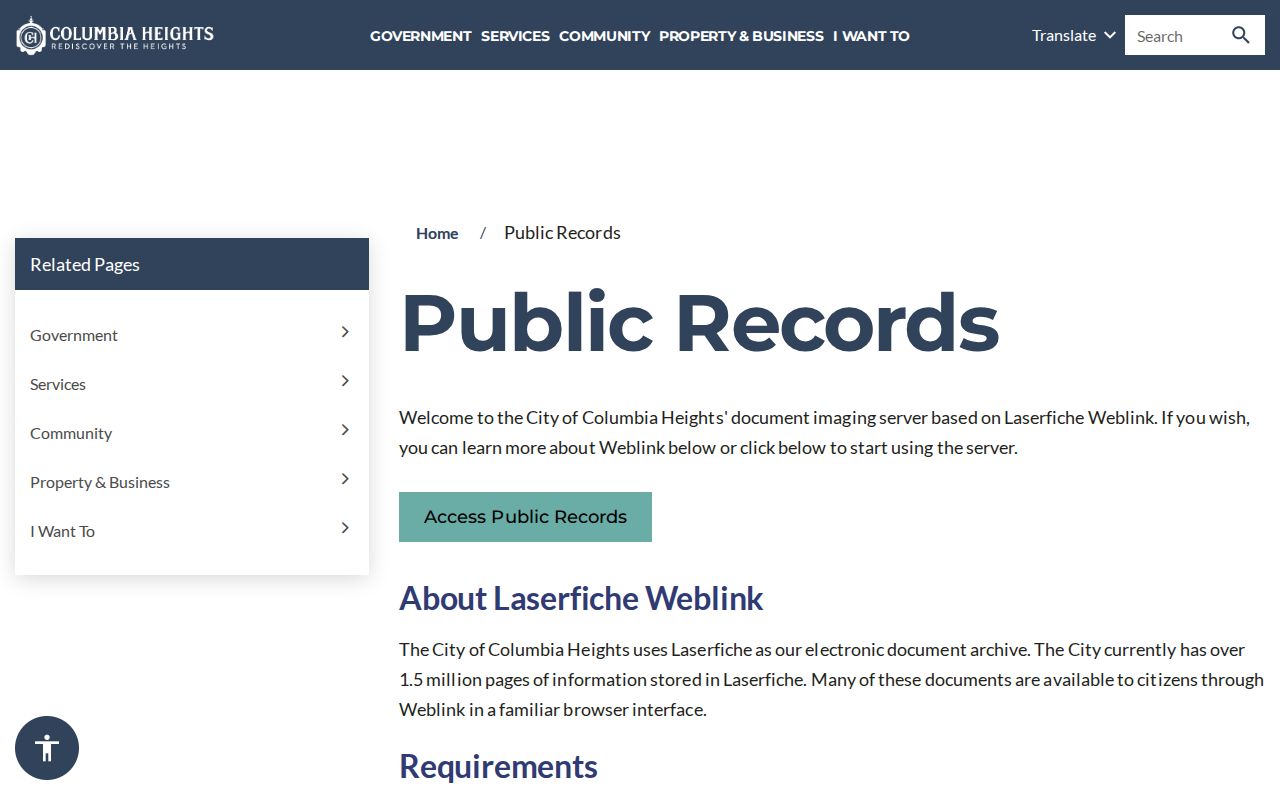
The Columbia Heights public-records entry point routes city requests. For permits, inspections, and property material held by the city, the request should identify the specific address or parcel and period. The city says property-record responses may take several business days, while its embedded form did not reveal every current submission field during the research review.
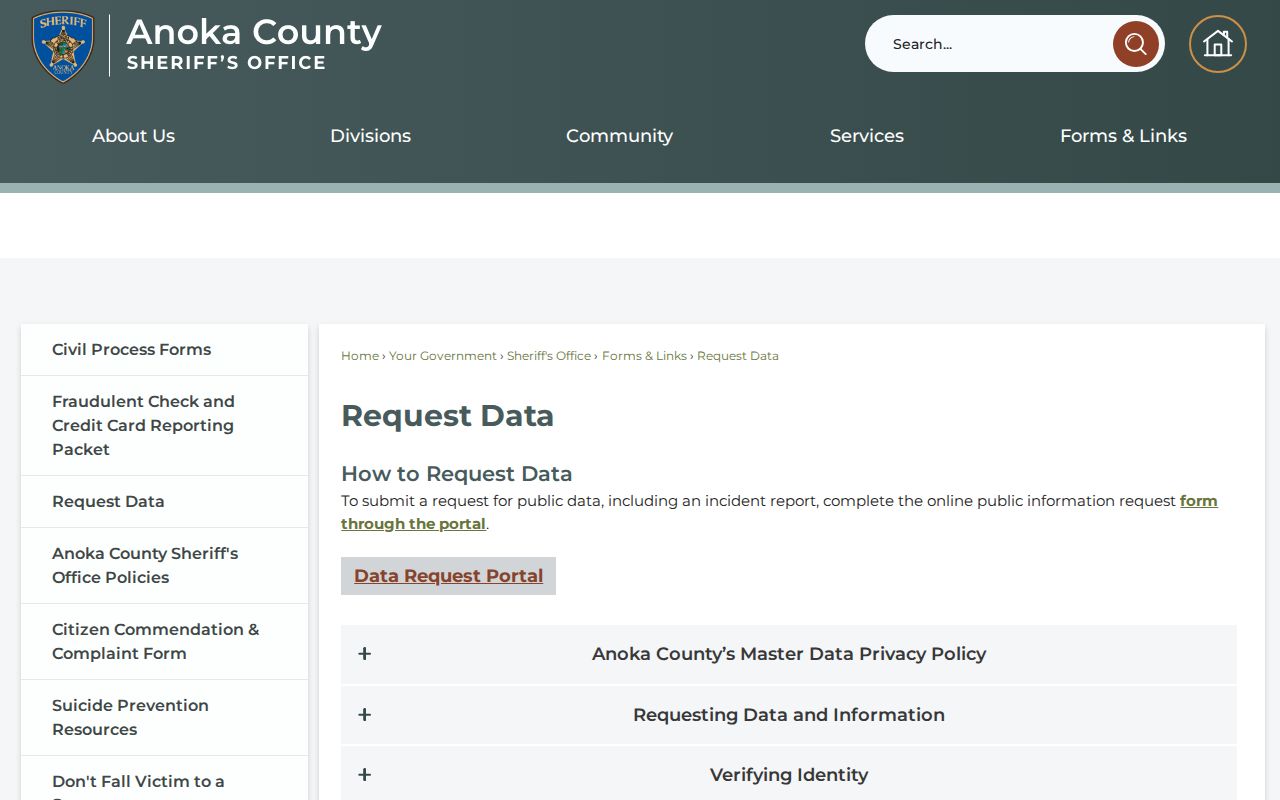
For county-held material, the Anoka County Request Data route provides the county’s formal path and its identity and fee guidance.
The Minnesota data-access guidance explains inspection, copying, and the requirement to identify the data requested with enough precision for the responsible authority to locate it.
For records in several offices, make separate focused requests rather than asking one custodian to assemble an all-purpose residents list.