
Finding Columbia Heights Residents
No single roster lists everyone in Columbia Heights. Match the record to the question instead. A street address fits the Anoka County parcel tools. A person tied to a public court case fits the statewide court index. For an earlier household, try a newspaper item. A city directory entry or a historical map can help too. Keep the roles straight. A parcel owner, a tax-mail recipient, a voter, and a case party are four facts. A directory name is a fifth. A current owner record does not prove anyone lives there now.
Track your own trail as you go. Record the PIN, the street address, and the date you checked. Note name spelling variants and a date range before hopping between sources. That habit makes a same-name mismatch easier to spot later. It also keeps the Columbia Heights residents directory honest for family history and estate work. Reconnection, civic questions, and personal safety count too. One record can only prove so much.
- Search the county GIS by a house number and street fragment, then write down the parcel address and PIN.
- Compare the property record’s owner and mailing fields with the record date instead of assuming either field identifies a resident.
- Use the recorder’s grantor and grantee index when a transfer history, deed, or legal description is needed.
- For a known individual and complete registration details, use Minnesota’s official registration lookup only within its legal limits.
- When the trail is historical, check library, historical-society, and Minnesota Historical Society collections before making a focused public-data request.
Columbia Heights Records Offices
Columbia Heights sits wholly inside Anoka County. Its records split across City Hall, county property offices, the district court, and statewide custodians. The City Clerk is the municipal doorway. That office handles council material, public notices, data practices, and city records. County Property Records and Taxation routes parcel and tax questions. The Recorder and Registrar of Titles keeps the land archive. For a city-held record, City Hall is the best first call. A deed or parcel chain belongs to the county.
Property Records and Taxation
2100 3rd Ave
Anoka, MN 55303
763-323-5400
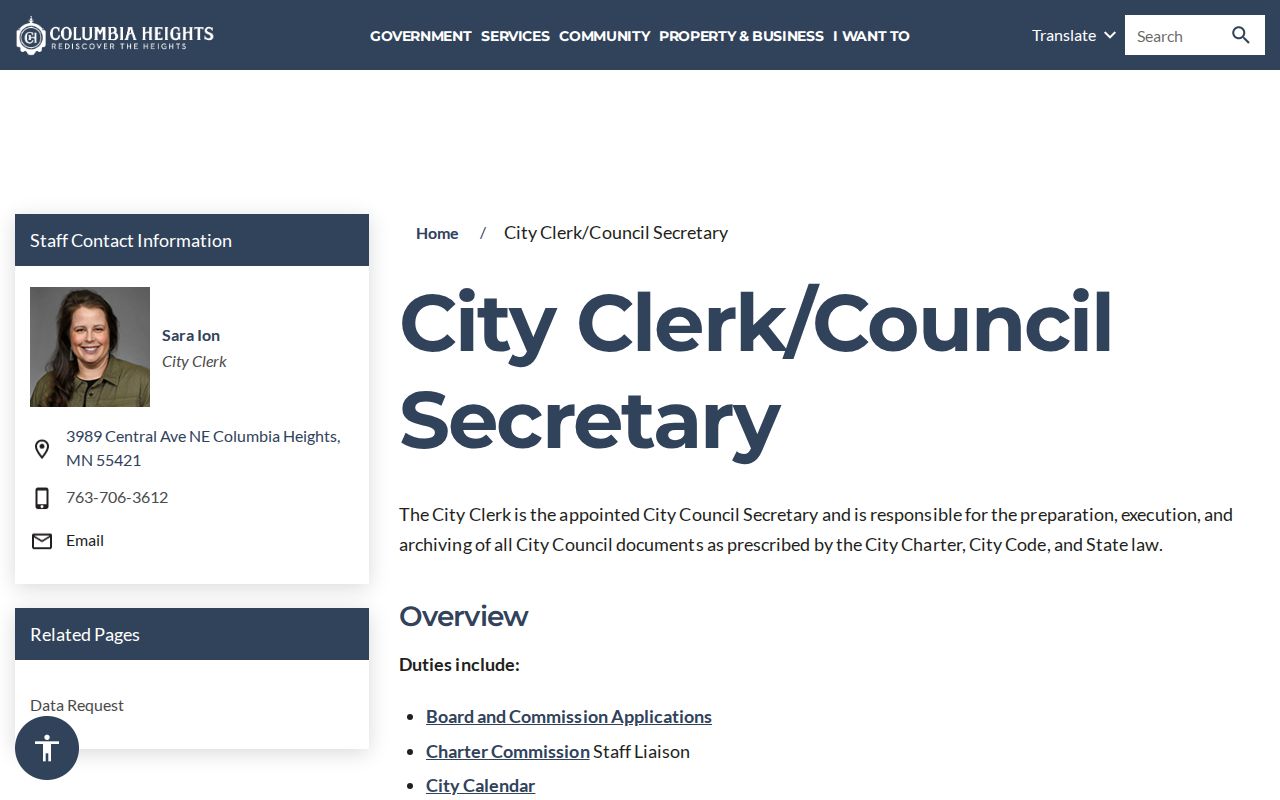
Columbia Heights City Clerk
3989 Central Ave NE
Columbia Heights, MN 55421
763-706-3612
The City of Columbia Heights service directory is the practical starting point for clerk, permit, code-enforcement, and public-records routing. Clerk and records paths hang off that hub. No general resident list exists there.
The City Clerk / Council Secretary page offers another route. It covers agendas, packets, minutes, notices, elections, archives, and data-practices information.
Ask narrowly, not broadly. A request naming a meeting date, permit number, parcel, or record series gets better results than asking a city office to assemble a list of residents.
Columbia Heights Parcel Path
The Anoka County Property Search GIS handles a Columbia Heights address. It turns that address into a stable parcel record. It documents categories for Addresses, Parcel IDs, Plats, Half Sections, Schools, and Public Buildings. Type a house number and street, skipping the city and punctuation. Then pick the correct match from the list. A PIN works with or without dashes. Extras include aerial imagery, plat layers, and historical aerials. A Near Me radius tool and map exports round out the package. One more format helps at corners. Join two street names with an ampersand and the map understands the intersection you mean.
| GIS field or tool | How it works | Why retain it |
|---|---|---|
| Address | House number plus street, including partial street fragments | Finds the current parcel starting point |
| Parcel ID / PIN | Accepts dashed or undashed numbers | Bridges GIS, tax, and recorder research |
| Plat | Searches plat categories and map context | Connects lot and block language to a place |
| Historical aerials | Available alongside current map views | Helps date physical changes without identifying people |
A parcel is the mapped unit of land. Its situs address is the property location. An owner mailing address is simply where tax mail goes, and a plat is a mapped subdivision description. Because those fields can point in different directions, the Columbia Heights residents directory treats them as separate facts.
- PIN
- The parcel identification number, a stable link between county land records.
- Index
- A searchable list of records, which may not include every underlying image.
- Criss-cross directory
- A reverse directory arranged by address rather than by a person’s name.
- Resident roll
- A source that records a person’s role, such as owner or voter, at a particular time.
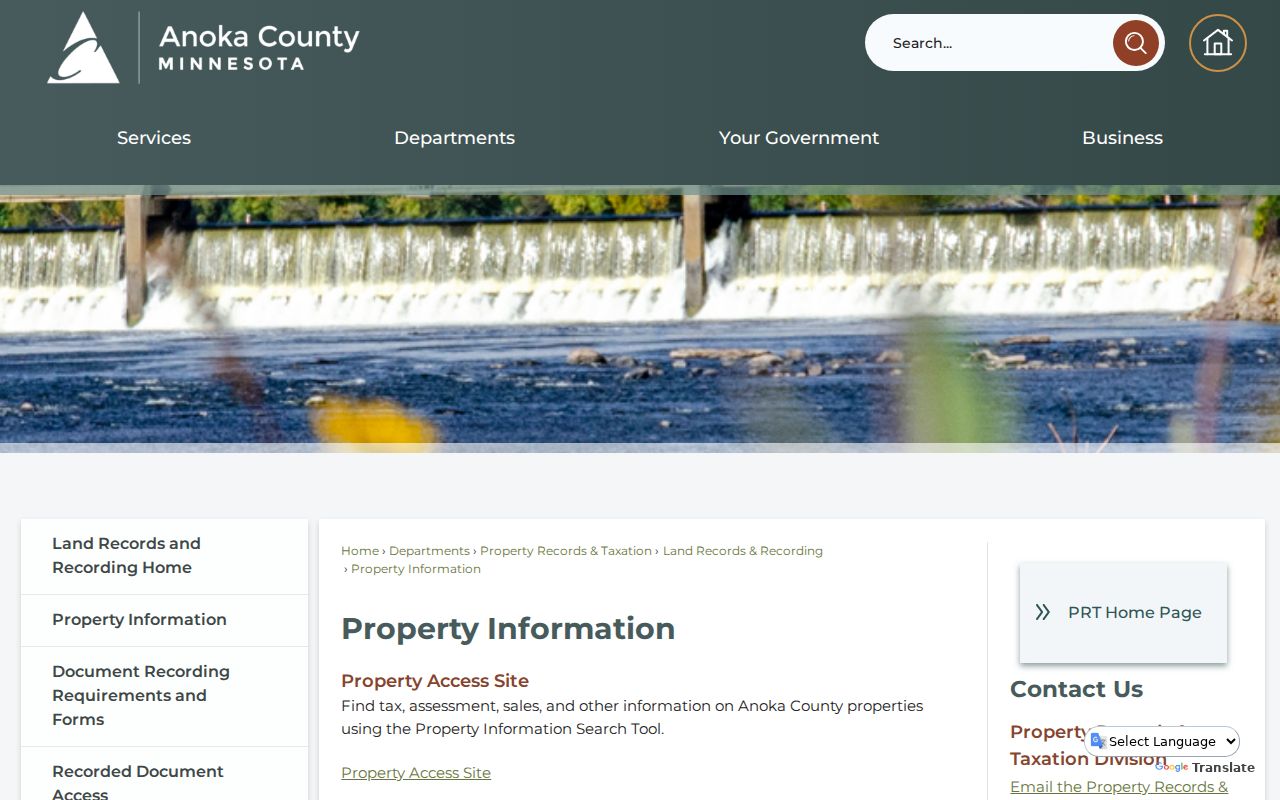
The county's Property Information page links both the property access site and the mapping application. It is a handy fallback.
Once an address has a PIN and legal description, the fuller address-by-address trail continues on the Columbia Heights street directory path. That page goes deeper.
Columbia Heights Deed Trails
Deeds, mortgages, satisfactions, and other recorded real-property instruments for Anoka County sit with the Recorder and Registrar of Titles. Every search has two sides. Grantor means someone transferring an interest. Grantee means someone receiving one. Then compare the instrument number, recording date, document type, PIN, legal description, and image availability. Minnesota's recorder index statute, Minn. Stat. §386.03, lists the core reception-index fields: grantor, grantee, land location, instrument number, and kind of instrument.
One free, complete online historical search does not exist. Anoka County instead describes a subscription service for continuing grantor and grantee research, a public research area with Room 119 terminals, and bulk optical images. The bulk images cost $0.15 each. They skip the grantor and grantee index, so they are most efficient once the instrument number is known. No online year cutoff appears in the official material. For an older Columbia Heights address, call the recorder or use the public room. The subscription screen may not reach every era. Do not assume otherwise.
Property Alert is a free county service. Tied to a PIN, it sends subscribers later document metadata and images. It flags future changes, not a full title sequence.
Current Columbia Heights Directories
Current sources tied to Columbia Heights list people only in defined roles. County parcel rolls may name an owner and a mailing recipient. The city staff directory covers employees, not households. Court records through MCRO identify parties to a case, with restrictions attached. Minnesota's voter lookup confirms a registration when complete details are supplied. Compare these records rather than blending them into a claim of where someone lives now. The date on a source matters. So does the role it assigns a name. Both count as much as the name itself in any residents directory search.
| Columbia Heights source | Role shown | Custodian | Access route |
|---|---|---|---|
| Parcel and tax record | Owner, mailing address, parcel facts | Anoka County | GIS, property site, or county counter |
| Recorder index | Grantor and grantee in a land record | Recorder / Registrar | Subscription, Room 119, or ordered image |
| Voter registration lookup | Registration status for supplied identity details | Minnesota Secretary of State | Official individual lookup |
| City staff listing | Department, title, email, and phone | City of Columbia Heights | Official staff directory |
| Historic newspaper or directory entry | Past listing or public mention | Library or archive | Collection, microfilm, or research request |
An official record names its custodian, carries a date, and states its limits. Commercial people-finder products often mix fields from different years and roles, which makes them a poor stand-in for the underlying public source. When two official records disagree, keep both dates and ask the right custodian which field it maintains.
Columbia Heights Voter Verification
The Minnesota Voter Registration Lookup exists so a person can verify their own registration. It is not a tool for pulling a citywide set of names. The form asks for first and last name, full date of birth, and address details. The address route accepts either ZIP or county. It also takes city or township, house number, and street. Selecting that option also requires a unit number where one applies. Updates run nightly. Election offices may still need up to 14 days to process a registration or change.
Public use of the voter list is restricted by Minn. Stat. §201.091. Anoka County's campaign-tools information describes precinct geography searchable by address, street, and house range. But the voter database itself is limited to elections, political activity, or specified law-enforcement purposes. A registration result proves none of the things a resident lookup might suggest. It shows no ownership. It shows no permanent address. It does not identify every person sharing a name.
Note: A missing result can reflect formatting, a recent move, processing lag, or a protected address, so use the official support route rather than broadening the search.
Columbia Heights Court Leads
Minnesota Court Records Online is called MCRO. It offers a statewide case search that narrows to Anoka County. Search options include name, case number, citation number, and attorney. You can also use date of birth or filing-date fields, case category, status, and court location. Use a legal-name variant and a date range where you can. The name search allows a trailing wildcard after two characters. That option cannot be combined with Sounds Like.
MCRO results are unofficial and not certified. The portal may show case information, a Register of Actions, and certain public documents. It masks or excludes protected material. A Columbia Heights result is not proof of identity, current address, responsibility, or outcome. The Anoka County Courthouse has public terminals that can provide fuller electronic access when the web record is restricted. Court staff can explain access and copy procedures, though they do not give legal advice.
Columbia Heights Vital Paths
Birth, death, marriage, and divorce records do not sit in one Columbia Heights office. The Minnesota Department of Health Vital Records program holds Minnesota births since 1900. It also holds deaths since 1908. Any Minnesota county vital-records office may serve statewide requests. MDH accepts mail or fax applications but offers no public counter. A public birth record can permit a noncertified copy. Certified and confidential records carry eligibility, identification, and attestation rules. Noncertified death records are public, while certified death certificates still have requester rules.
A marriage certificate comes from the county that issued the license. The Minnesota Official Marriage System indexes most state marriages. Anoka's coverage is listed as 1858 to current. A divorce decree belongs with the Anoka County District Court. For earlier leads, MNHS People Records indexes births from 1900 to 1934 and deaths from 1904 to 2001. But an index entry is not automatically a certificate. The MDH vital-records information page explains the statewide product and ordering routes.
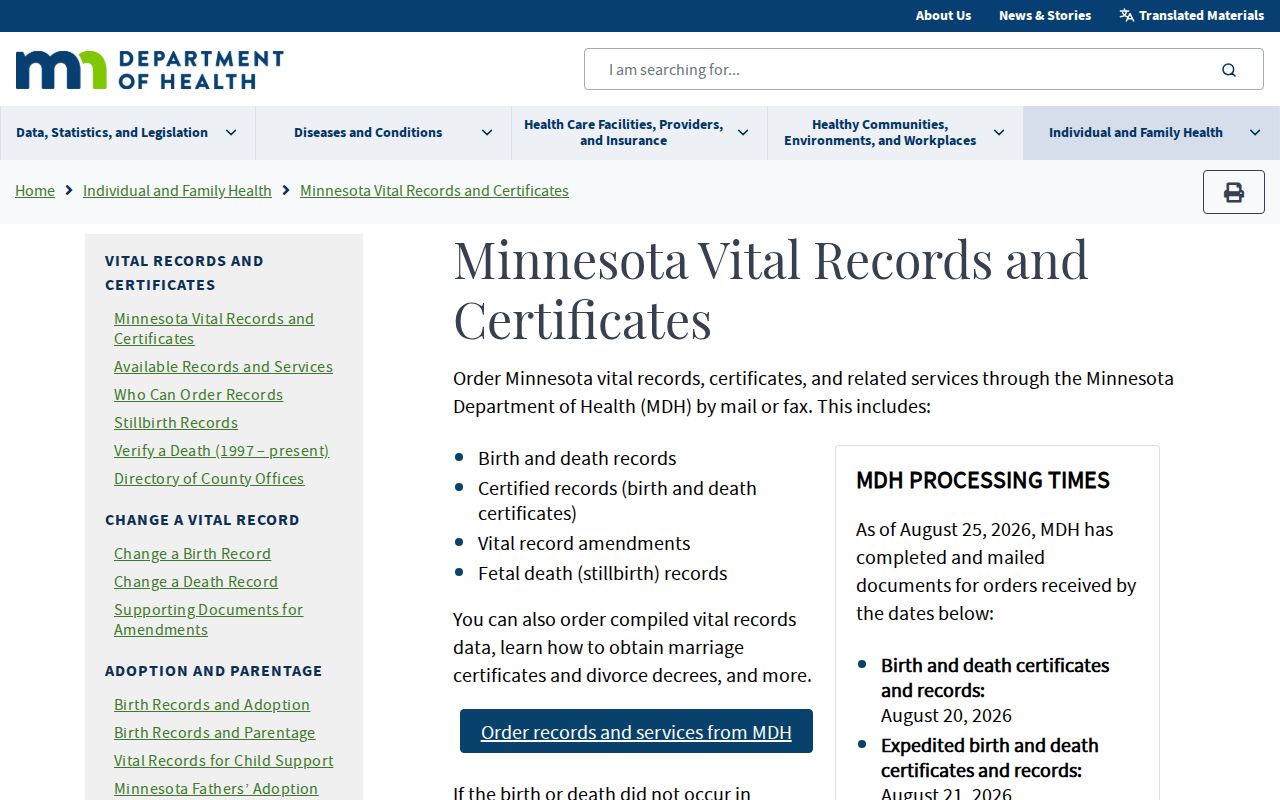
Treat a historic vital index as a lead, not a destination. Follow the eligibility rules for the record product you actually need.
Historical Columbia Heights Directories
Historic Columbia Heights research depends on several shelves. No single confirmed online run of city directories covers it. The Columbia Heights Public Library is an affiliated Anoka County Library at 3939 Central Ave N. It can help with local reference and historical material. The Anoka County Historical Society holds newspapers, census records, photographs, maps, obituaries, microfilm, cemetery information, and vital-statistics indexes. Its map collection includes 1888, 1914, and 1932 plats, which can translate a lot or old locality into a modern address question.
Hennepin County Library's digital Phone Books and City Directories collection helps with nearby-city leads, especially Minneapolis. Its published scope does not establish a Columbia Heights-specific run. A Minneapolis listing is an adjacent-city lead. Verify the jurisdiction before relying on it. For a detailed directory-entry method, the historical collections are developed further in the Columbia Heights city directory material.
Columbia Heights Newspaper Handoff
Surname searches sometimes stall for a strange reason. The newspaper simply changed its name. The Anoka County Historical Society tracks the Columbia Heights Pioneer from January through November 1939, with the Columbia Heights Record appearing about a month later. One title may miss what the other finds. That is a source-name problem, not evidence that anyone vanished or moved.
The society's research collections hold selected Record issues, earlier Anoka-area newspapers, obituaries, maps, census resources, and local files. Write down every detail you find. Cite the publication title, issue date, page, and repository. That citation keeps a Columbia Heights residents directory lead traceable and lets a later researcher recheck the original context.
Anoka Documents by the Numbers
Anoka County's recording workload is huge. The 2024 annual report counted 44,329 documents. Of those, 34,376 are Abstract and 9,953 Torrens. Abstract and Torrens name two different land-registration systems, and a record's status affects how a transfer is documented. That is why the recorded-land system needs its own index and research-room access instead of a simple name list, and not every document is equally available online. Treat the figure as a 2024 baseline. It is not a current count.
For a Columbia Heights parcel, use the legal description and document number to narrow the work before ordering copies. County fee schedules distinguish plain, attested, certified, plat, recording, and other services. Confirm the current schedule before ordering, because the county's posted fees took effect July 1, 2025.
Columbia Heights Privacy Limits
Privacy law sets real boundaries around Columbia Heights records. The Minnesota Government Data Practices Act classifies government data as public or not public under a specific law. Public access does not make every field publishable. Courts mask protected details. Vital records carry eligibility rules. Voter data has its own use restrictions. A missing Columbia Heights address is not a puzzle to attack. It may reflect a format problem, a delayed update, a confidential record, or Minnesota's address-confidentiality program.
Minnesota Safe at Home gives participants a substitute post-office-box address and mail forwarding when they fear for their safety. Never try to correlate that designated address with parcel, voter, or court material; if a record is protected, contact the custodian about the classification instead of attempting to uncover the person's location.
Columbia Heights resident records support lawful personal research and civic transparency. They are never for stalking, harassment, intimidation, or harm.
Columbia Heights Records Requests
Offline records still start with a simple request. Ask the office that actually holds the record. Under the Minnesota Government Data Practices Act, Minn. Stat. ch. 13, the public may inspect and copy public government data unless a law classifies it otherwise. Agencies do not write new reports for you. Nor must they answer broad research questions. Give a department, an address or PIN, a date range, the record type, and your preferred delivery method. Inspection is free. Copy charges vary with the request.
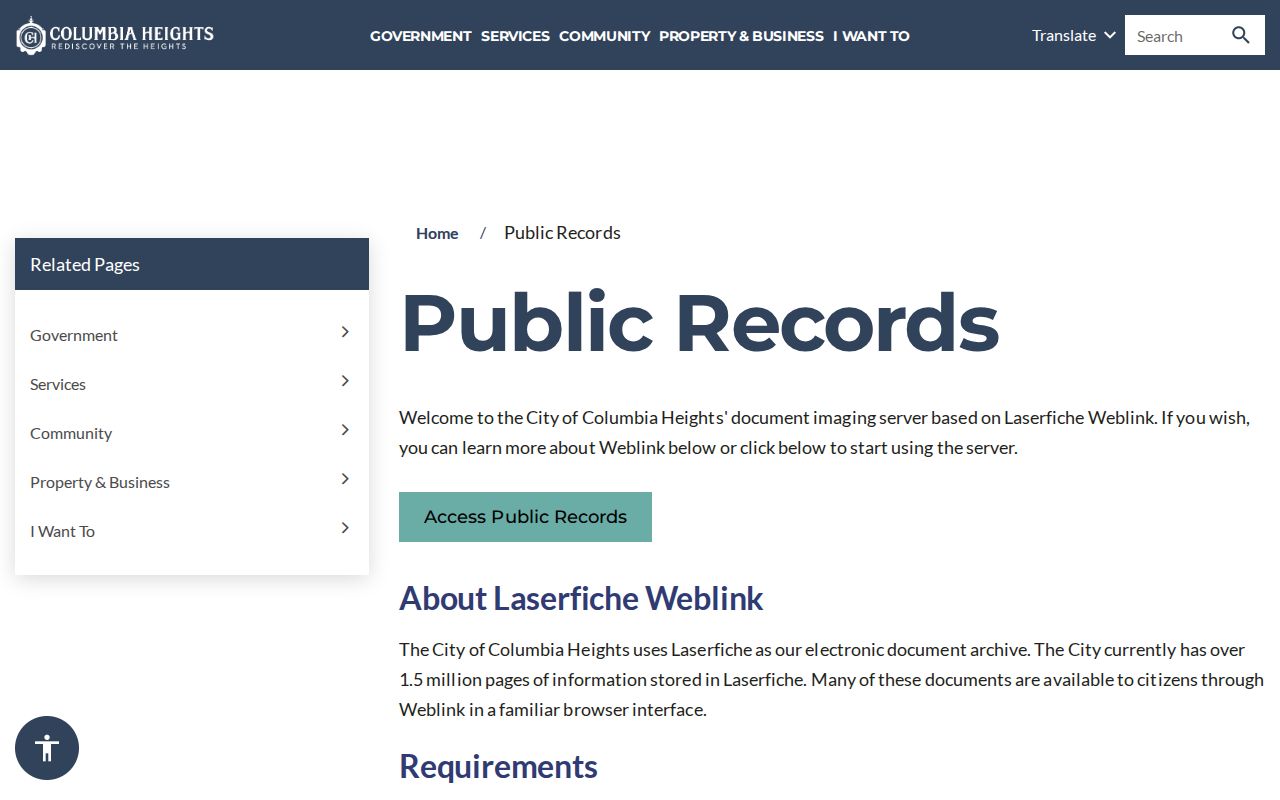
The Columbia Heights public-records entry point routes city requests. For permits, inspections, and property material the city holds, identify the specific address or parcel and the period. The city cautions that property-record responses may take several business days.
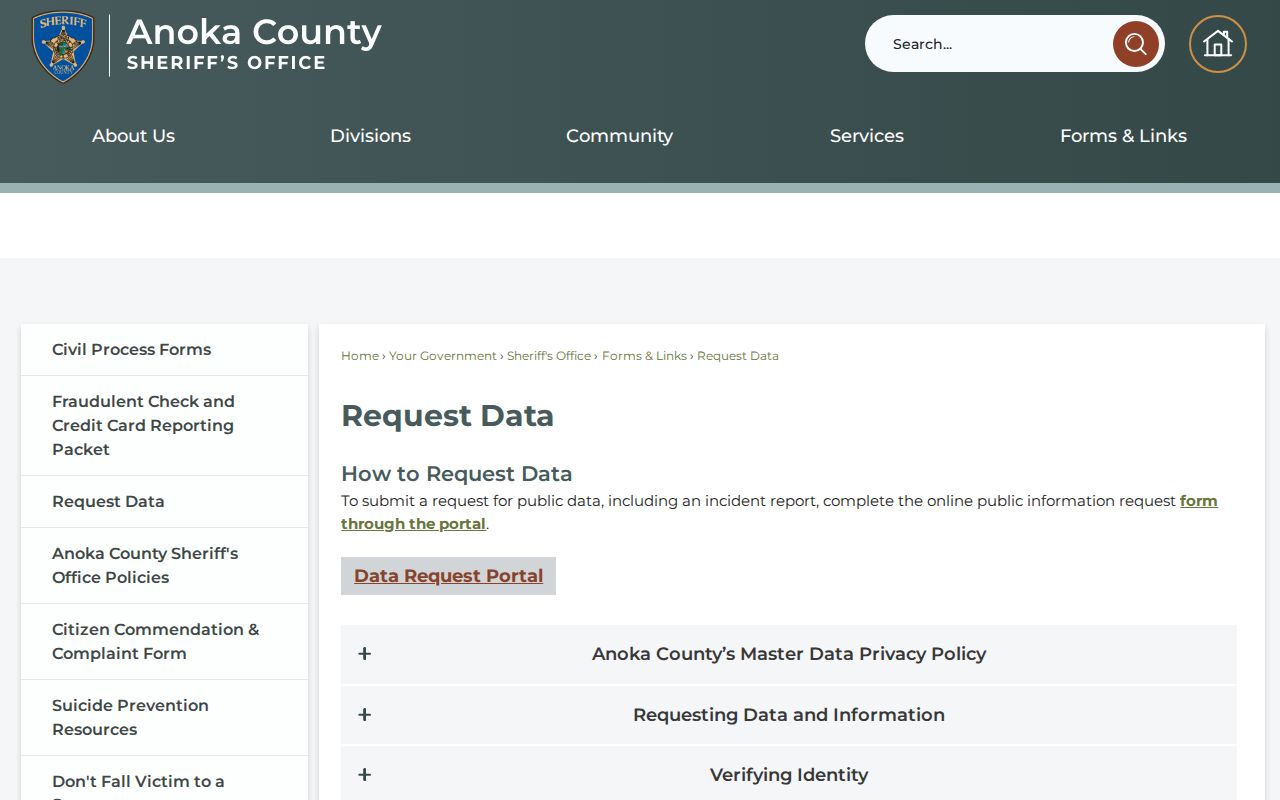
County-held material follows a different door. The Anoka County Request Data route provides the county's formal path, along with its identity and fee guidance.
State-level help exists too. The Minnesota data-access guidance explains inspection, copying, and the requirement to describe the data precisely enough for the responsible authority to locate it.
Split your requests across offices. No custodian will assemble an all-purpose residents list, so separate focused requests work far better.